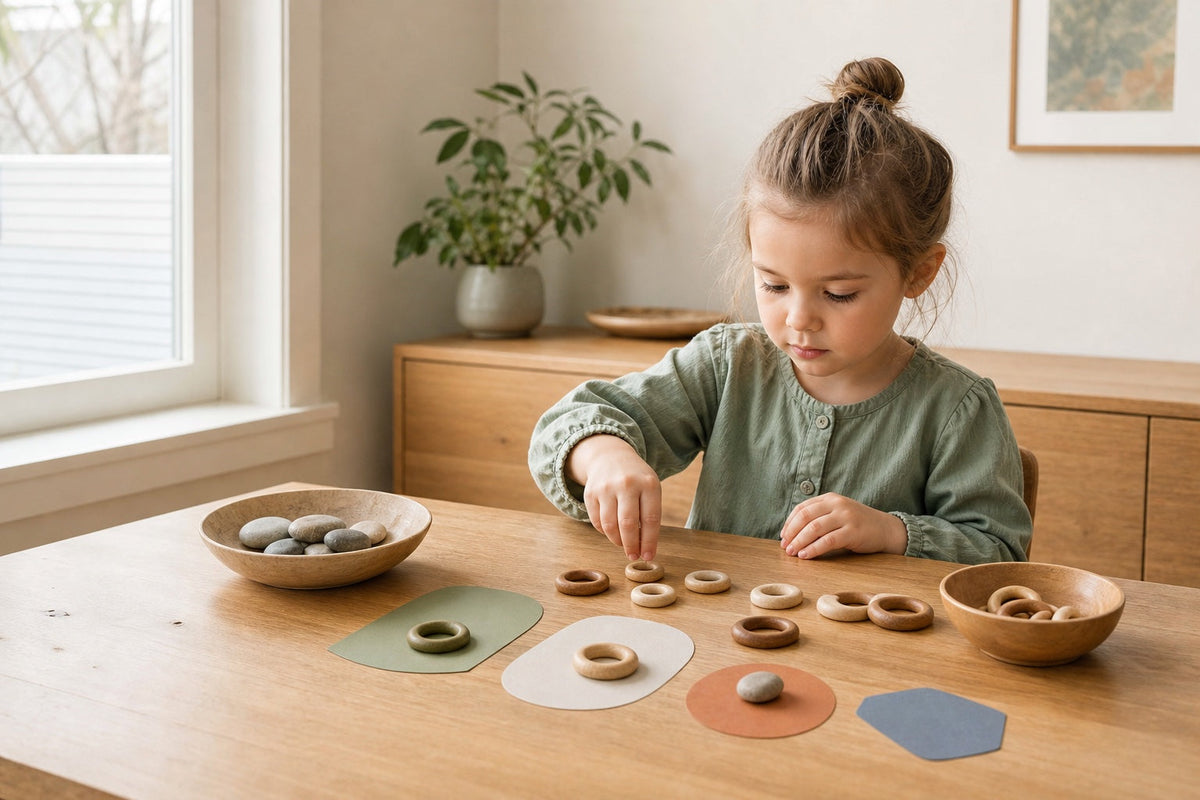
Article: What to Do When Your Child Says 'I'm Bored'

What to Do When Your Child Says 'I'm Bored'
“I’m bored” can sound like a request for an immediate list of entertainment. Sometimes it means exactly that. Sometimes it means, “Starting feels hard,” “I want connection,” “I do not know what to choose” or “I am adjusting to a slower moment.”
Boredom does not need to become a test of willpower. A calm response can acknowledge the feeling while leaving room for the child to take the next step.
Pause before solving
When adults respond with ten ideas, children can reject all ten and remain dependent on the next suggestion. Try a brief pause first: “You’re not sure what to do yet.” This names the moment without rushing to remove it.
If your child needs connection, offer a small dose: a hug, a drink of water or two minutes sitting together. Then help make the beginning visible.
Use a starting prompt, not a full plan
A good prompt opens a door without deciding everything behind it:
- “Can you build something taller than this cup?”
- “Find five things that belong together.”
- “Draw a place where this animal could hide.”
- “Make a road that goes under something and over something.”
- “Choose three colors and invent a pattern.”
Offer one prompt, not all five. If the child says no, you can calmly leave the materials available.
Create a family “starting shelf”
Keep a few familiar, open-ended materials in a consistent place. The goal is not a perfect playroom. It is a reliable answer to the question, “Where can I begin?”
A starting shelf might include blocks, drawing materials, a puzzle, play dough and a small basket for pretend play. Rotate slowly so the area stays familiar.
Teach a simple choice process
- Look: What materials are available?
- Choose: Pick one for five minutes.
- Start: Make one mark, place one piece or choose one character.
- Decide again: Continue, change it or put it away and choose once more.
This gives children a process they can eventually use without an adult generating the activity.
Know when boredom is not the real issue
A tired, hungry or overwhelmed child may not be ready for independent creativity. Sometimes the useful response is food, movement, closeness or rest. Supporting play does not mean ignoring the rest of the child.
It is also reasonable for a child to want company. You can set a boundary that includes connection: “I can build with you for five minutes, then I will make dinner while you continue.”
Let the middle be a little uncomfortable
The space between “nothing is happening” and “I have an idea” can feel uncomfortable. That space is also where children practice initiating. Stay calm enough that the pause does not become an emergency.
You do not need to celebrate boredom or force a child to be grateful for it. You can simply trust that not every empty moment requires an instant screen or adult-designed activity.
A small step to try today
Choose one sentence you can use consistently: “You do not know what to do yet. Let’s choose one place to start.” Then offer one material and one prompt. Give the idea time to become theirs.