7 Screen-Free Activities for Children Ages 3-5
Screen-free play does not need a long supply list or an adult performing constant entertainment. The most useful activities are easy to begin, flexible enough to repeat and open to the child’s own ideas.
These seven activities are designed for children ages 3-5. Adjust materials for your child, supervise small objects and keep the first invitation simple.
1. Sort the everyday
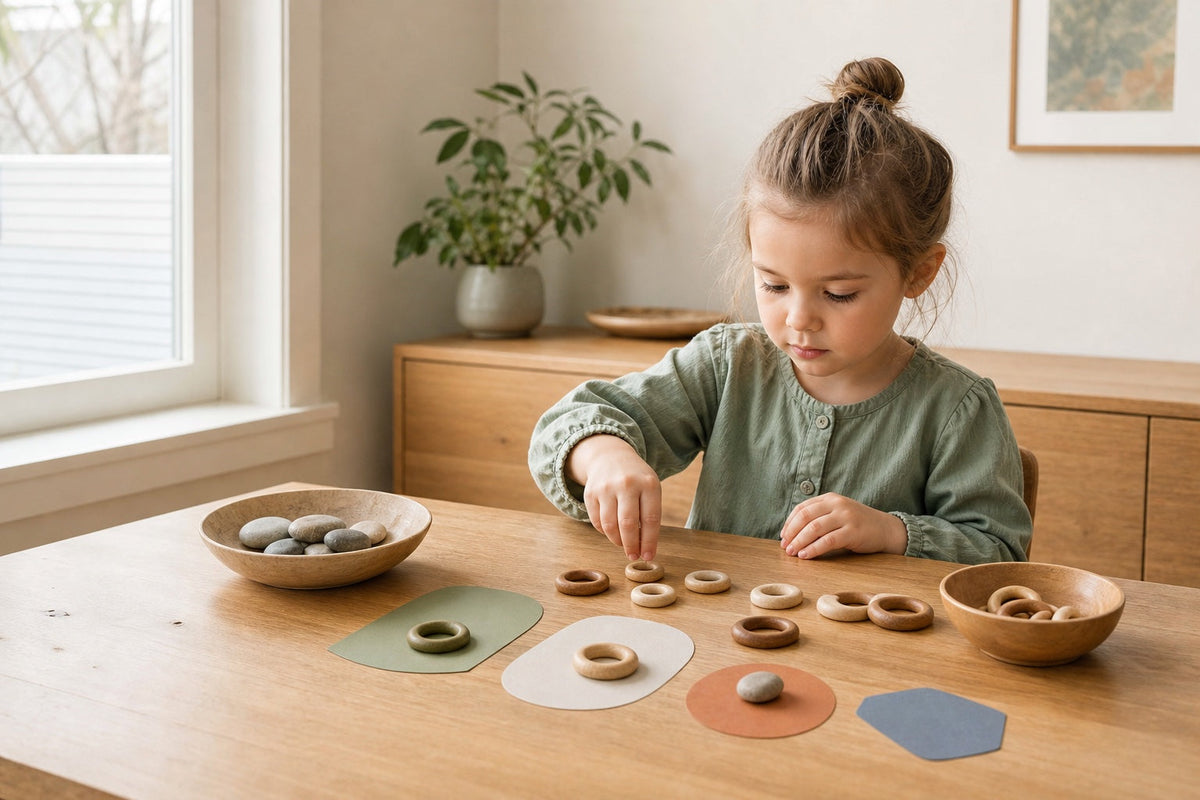
Place six to ten safe household objects on a tray: lids, spoons, fabric pieces or large craft items. Ask your child to make groups. If they need a start, offer one possibility such as color, then invite a different rule.
Extend it: Ask, “Which object was hardest to place?”
2. Build a bridge
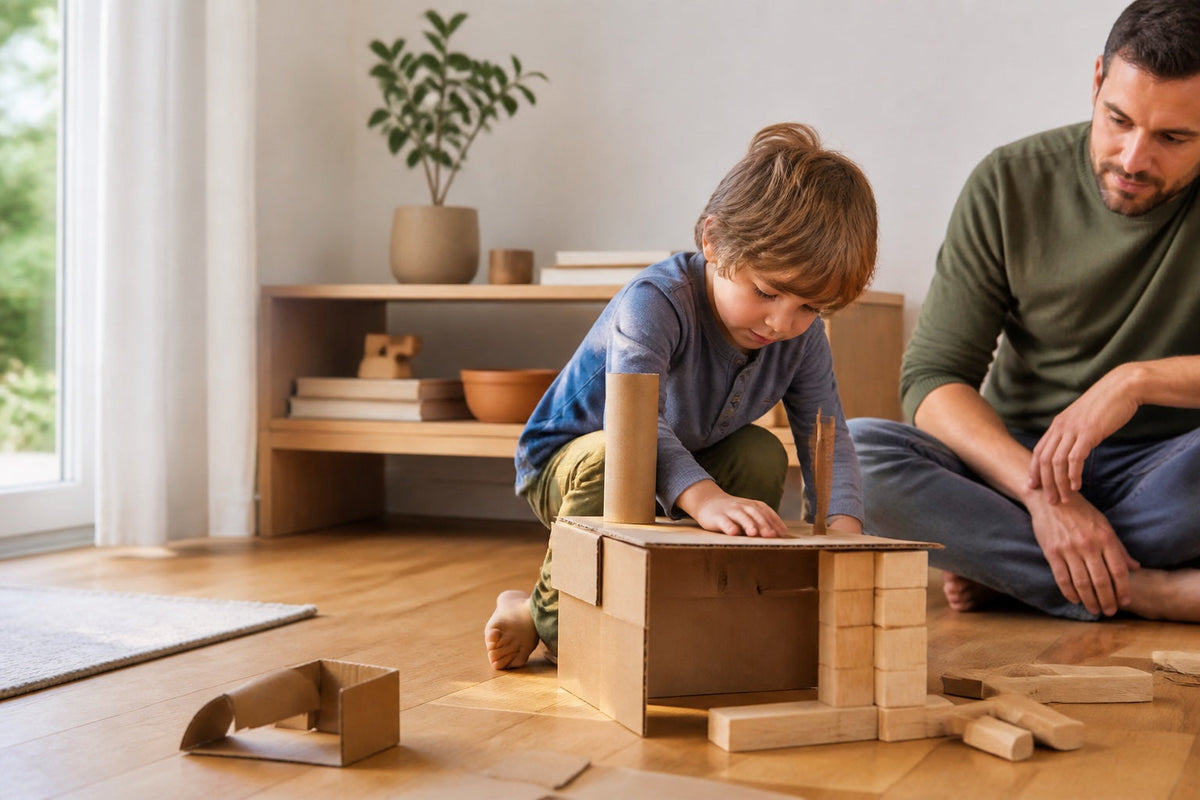
Use blocks, small boxes or sturdy cups. Choose a toy figure or object that needs to cross. The challenge is to create a bridge wide enough and strong enough.
Extend it: Make the distance longer or add a “river” made from a scarf.
3. Continue the pattern
Begin a simple pattern with two colors or shapes: green, yellow, green, yellow. Leave the next space empty. Once your child continues it, invite them to make a pattern for you.
Extend it: Add a third element or turn the pattern into a sound-and-movement sequence.
4. Draw a home for something small
Choose a toy animal, stone or leaf. Ask what kind of home it might need, then offer paper and a few drawing tools. The drawing can become a map, room plan or story setting.
Extend it: Build one part of the home with blocks or recycled boxes.
5. Mystery texture bag
Place several familiar, safe objects in an opaque bag. Without looking, the child feels one object and describes it before guessing. Use words such as smooth, bumpy, soft, hard, round and flat.
Extend it: Let the child choose the objects for an adult to guess.
6. Copy, then change
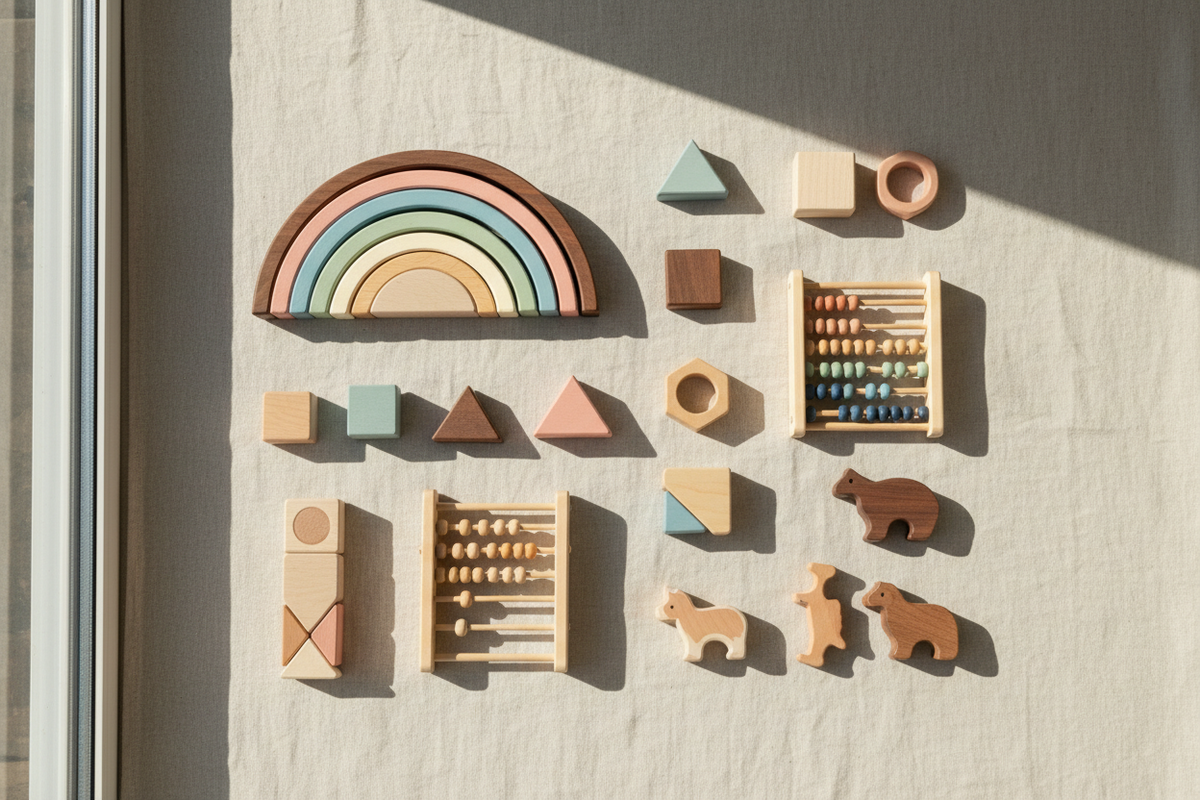
Create a small block arrangement or shape picture with four to six pieces. Invite your child to copy it. When finished, ask them to change one part and explain the difference.
Extend it: Take turns creating models for each other.
7. Tell the build
After your child builds or draws, ask three gentle prompts: “Who is here?”, “What happens first?” and “What changes next?” Write down one sentence from the story if your child enjoys seeing their words recorded.
Extend it: Revisit the same setting tomorrow with a new problem to solve.
How to make these activities easier to repeat
- Keep the materials in one small basket or tray.
- Offer one activity rather than presenting the full list.
- Begin with your child, then step back when they engage.
- Repeat favorites with one small change.
- Stop before everyone is exhausted; the activity can return later.
A small step to try today
Choose the activity that needs the least preparation in your home. Set out the materials before the next common screen-time moment and use it as a clear invitation, not a demand.