Why Fewer Toys Can Lead to Deeper Play
When play feels scattered, the natural response is often to add something new. A new toy may create excitement, but it does not always make it easier for a child to settle into play. Sometimes the more useful change is to make fewer things visible.
Fewer toys do not guarantee deeper play, and families do not need a perfectly minimal home. The practical idea is simpler: reduce the number of decisions at the moment of starting.
A crowded shelf asks a big question
Imagine being told to choose one idea from dozens of unrelated options. A preschooler may pull out several toys, move quickly between them or ask an adult to decide. This is not a lack of imagination. The starting environment may be doing too much.
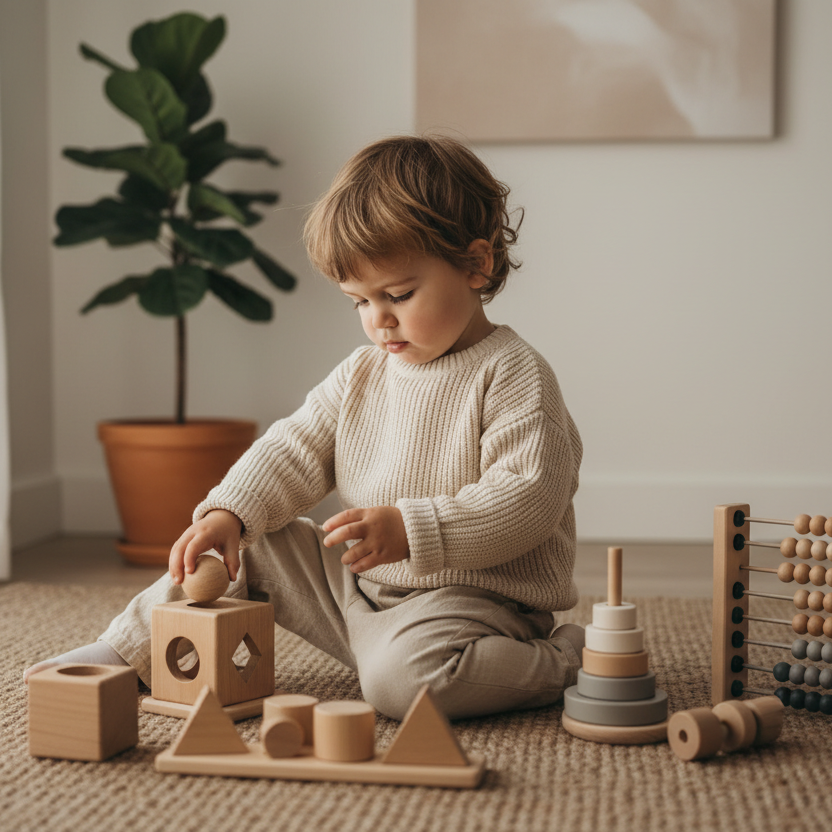
A calmer shelf makes each option easier to see. Children can notice what a material offers and return to something familiar.
Choose toys with room to change
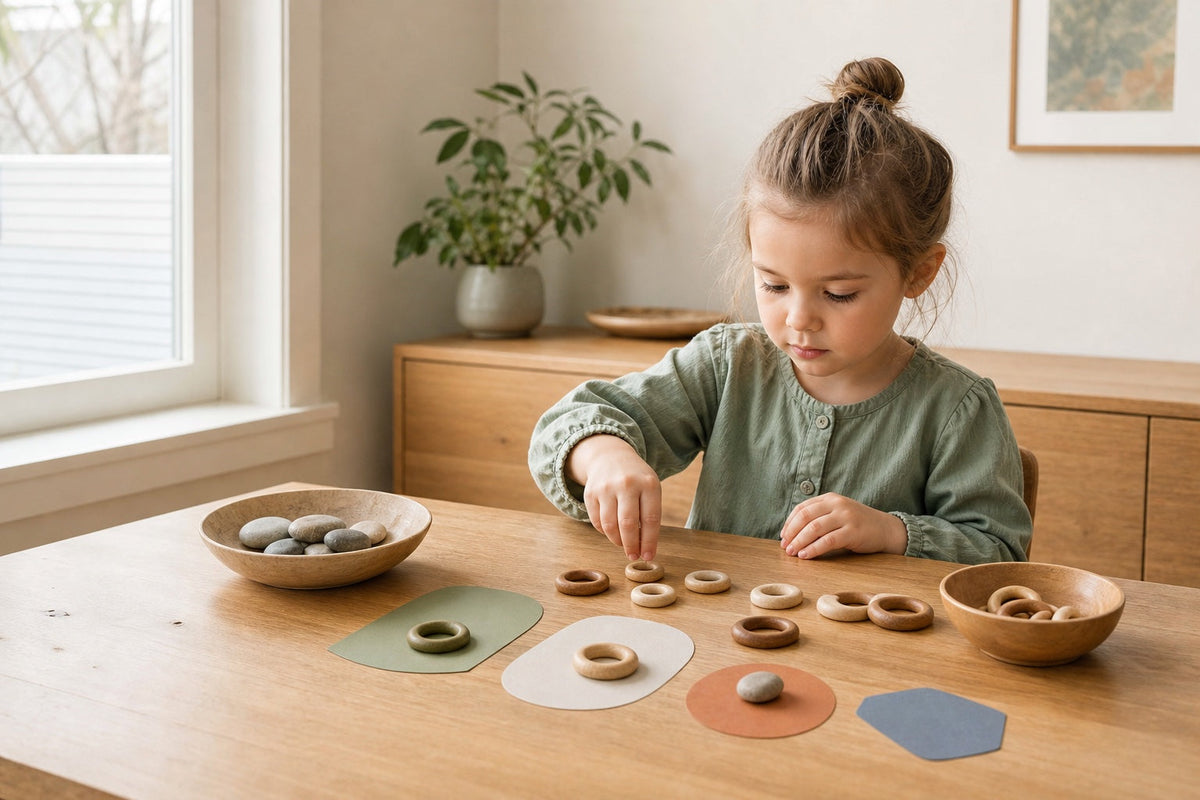
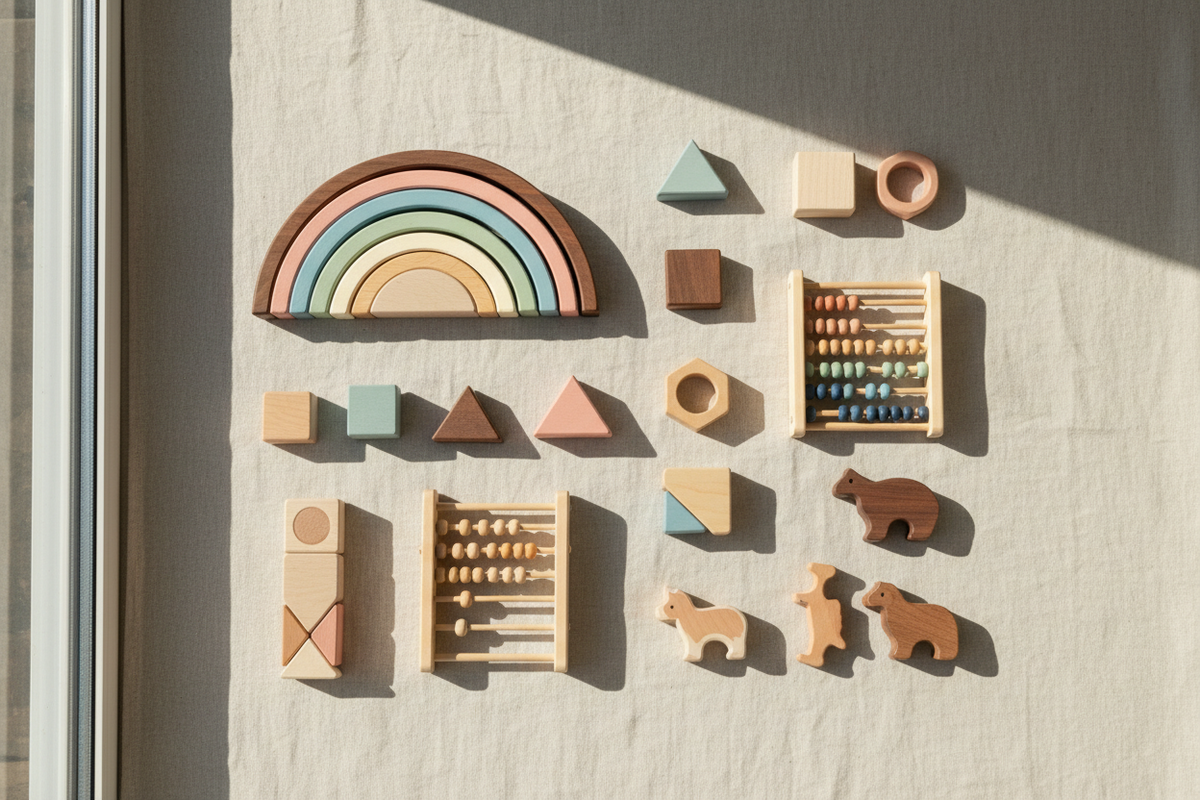
Materials tend to support repeat play when they can be used in more than one way. Blocks can become a wall, road, pattern, balance challenge or story setting. Paper shapes can be sorted, copied, combined and turned into pictures.
Look for play value beyond the first action:
- Can the difficulty grow?
- Can the child make their own version?
- Can the material combine with something already owned?
- Can the child explain, rebuild or revisit the idea?
- Does it work without constant adult entertainment?
Try a simple toy rotation
- Observe first. Notice what your child returns to and what mostly becomes floor clutter.
- Keep a small mix visible. Include building, pretend play, puzzles or matching, art and movement.
- Store the rest out of sight. This is not permanent removal. It is a pause.
- Rotate slowly. Change one or two choices when interest has genuinely faded.
- Bring back familiar favorites. Returning to an old material can create new ideas because the child has changed.
Presentation matters
A complete set hidden in a deep bin can be hard to understand. Use shallow baskets, small trays or clear groupings where possible. Put related pieces together. Keep enough open space that putting materials away is achievable.
You can also create a temporary invitation: six blocks on a mat, a puzzle beside an empty tray or three figures next to a half-built shelter. The same toy feels different when its first possibility is visible.
Let repetition do its work
Adults often read repetition as boredom. Children may be practicing control, testing a pattern or building confidence. Repeating a tower, puzzle or sorting rule is not wasted time. Once the action feels familiar, children are more able to vary it.
“Fewer, better toys” is not a rule about owning a particular number. It is a way of protecting attention: choose materials with purpose, show them clearly and give children time to discover more than the first use.
A small step to try today
Clear one small play surface and place only two choices there. Watch which one your child notices, how they begin and whether the play lasts differently. Use the observation to guide your next rotation.