How to Encourage Independent Play in Preschoolers
Independent play does not mean a young child disappears happily for an hour while a parent finishes a long list. For preschoolers, independence often begins much smaller: a child continues for five minutes after the adult stops leading.
That small continuation matters. It tells the child, “I can begin. I can make a choice. I can stay with my own idea.”
Begin with connection
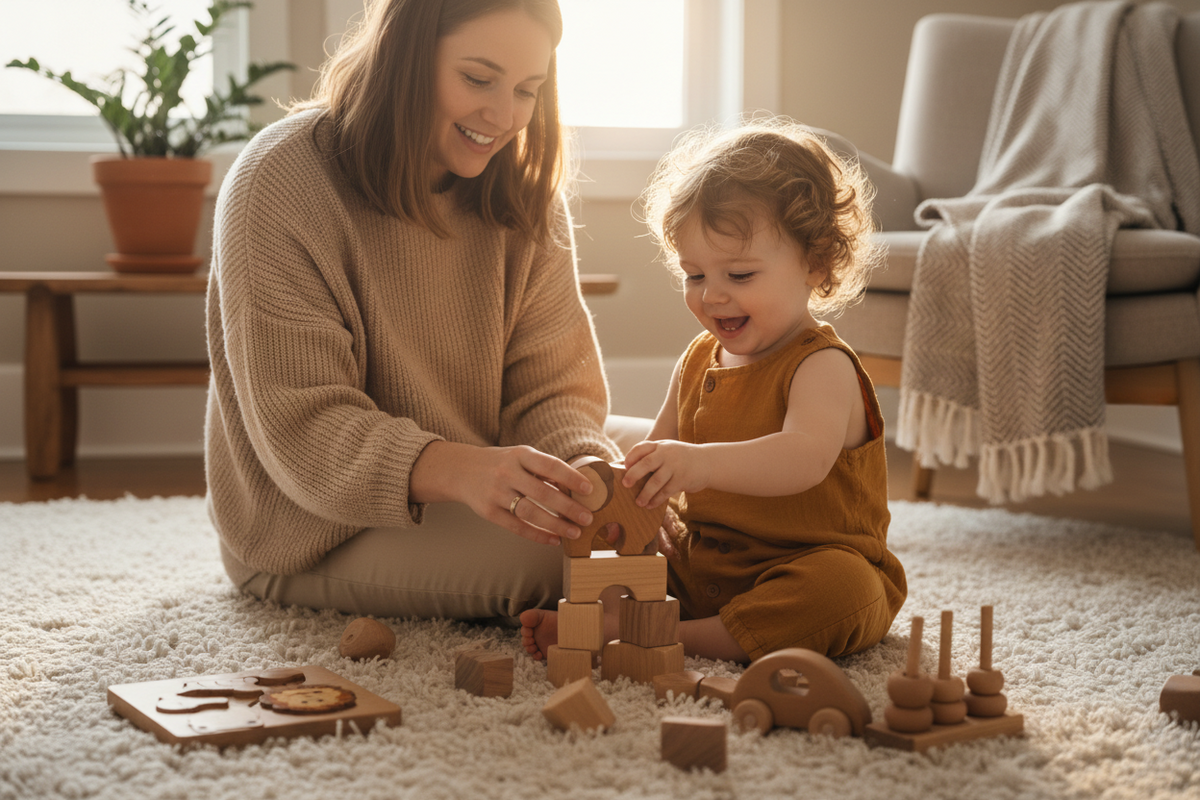
Children often play more independently after they feel connected. Sit beside your child for a short start. Place the first two pieces, wonder aloud or help choose a material. Then name your movement clearly: “I’m going to sit right here while you keep building.”
This feels different from suddenly leaving. The child knows where you are and what is expected.
Offer less, not more
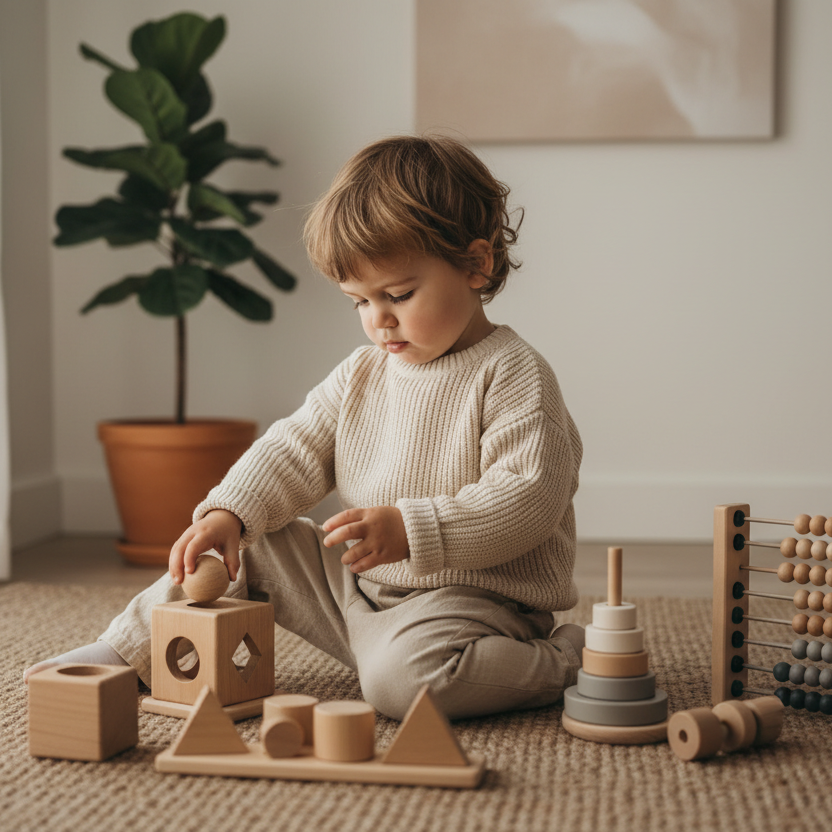
A room full of toys can create a difficult first question: where do I begin? Try one defined invitation on a tray, mat or small table. Useful independent-play materials often have a clear entry point and more than one possible outcome.
- blocks with one simple challenge;
- large puzzle pieces or matching cards;
- paper shapes, tape and crayons;
- play dough with a few tools;
- small figures with blocks for creating a place.
Make the first step easy to see
An invitation can be as small as three blocks already forming a base or two matching cards placed side by side. The adult is not showing the correct answer. The adult is reducing the effort required to start.
Once the child changes the arrangement, the play belongs to them.
Use supportive language
Try prompts that return the thinking to the child:
- “What could you try first?”
- “Which part would you like to change?”
- “I’ll watch while you test it.”
- “You can keep going. I’m nearby.”
- “Tell me when you are ready to show me.”
Avoid asking a rapid series of questions. One prompt followed by quiet time is usually more helpful.
Grow time in small steps
Start with a length of time your child can succeed with. If independent play currently lasts three minutes, aim for four or five. End while the experience still feels manageable, then return to the same rhythm another day.
Repeating familiar materials can help. A child does not need a brand-new activity each time. Familiarity frees attention for variation, storytelling and problem-solving.
What to do when your child keeps calling you back
Return briefly and predictably. Notice what has happened, offer one prompt and step back again. You might say, “I see the bridge fell. What could make the bottom wider? I’ll be at the counter while you try.”
If the child is tired, hungry or seeking closeness, independent play may not be the right goal in that moment. Family rhythms work better when they leave room for real needs.
A small step to try today
Choose one familiar material. Start together for two minutes, then move one arm’s length away and stay present without directing. Notice how long your child continues. That is your starting point, not a score.