How to Reduce Screen Time Without Daily Battles
Turning off a screen can be hard because a screen offers a clear, immediate experience. The next moment often feels less certain: the child does not yet know what to do, and the parent may be trying to cook dinner, answer a message or simply breathe.
A gentler transition does not begin with a perfect rule. It begins by making what comes after the screen easier to understand.
Start with rhythm, not negotiation
Preschoolers often respond better to a predictable sequence than a new decision every day. A simple rhythm might be: one episode, wash hands, snack, then table play. The exact routine matters less than its consistency.
Use a short phrase you can repeat calmly: “When the episode ends, the screen rests. Then we choose our table activity.” Repeating the same language reduces the number of moving parts.
Prepare the next invitation before the screen ends
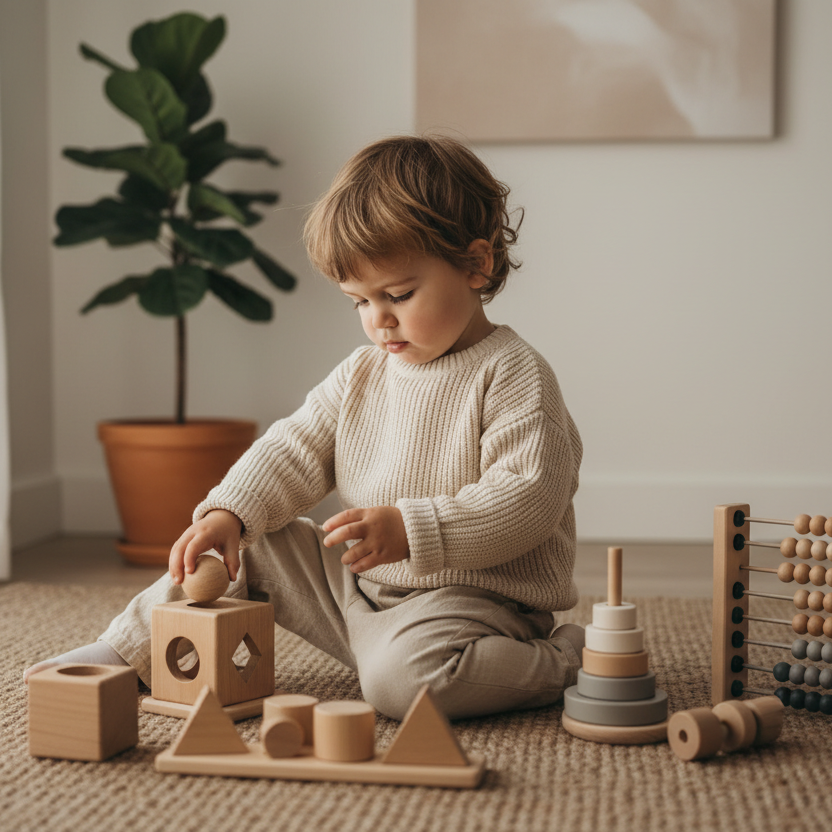
“Go play” is a very open request. A child leaving a highly structured screen may need a visible starting point. Before the transition, place one simple activity where the child can see it:
- five blocks beside a picture of a small bridge;
- paper, two crayons and a prompt to draw a home for an animal;
- a tray of safe objects to sort by color, size or texture;
- a half-finished pattern waiting to be continued;
- a bowl and tongs for transferring soft craft pieces.
The invitation should be easy to begin and open enough to continue. It does not need to be elaborate.
Expect feelings without changing the boundary
A child can be disappointed and still move through the transition. Acknowledge the feeling without turning it into a long debate: “You wanted more. Stopping is hard. I’m here.” Then point toward the next concrete step.
Calm does not mean the child will never protest. It means the adult does not have to solve the protest with another episode.
Use connection as the bridge
Some children cannot move directly from a screen into independent play. Try two minutes of connection first: carry the materials together, start one block, choose a color or sit nearby while the child begins.
You are not committing to lead the whole activity. You are helping the child cross the gap between experiences.
Reduce friction in the environment
- Keep the device out of sight after use. A visible screen keeps the previous option active.
- Offer two choices at most. “Blocks or drawing?” is easier than scanning a room.
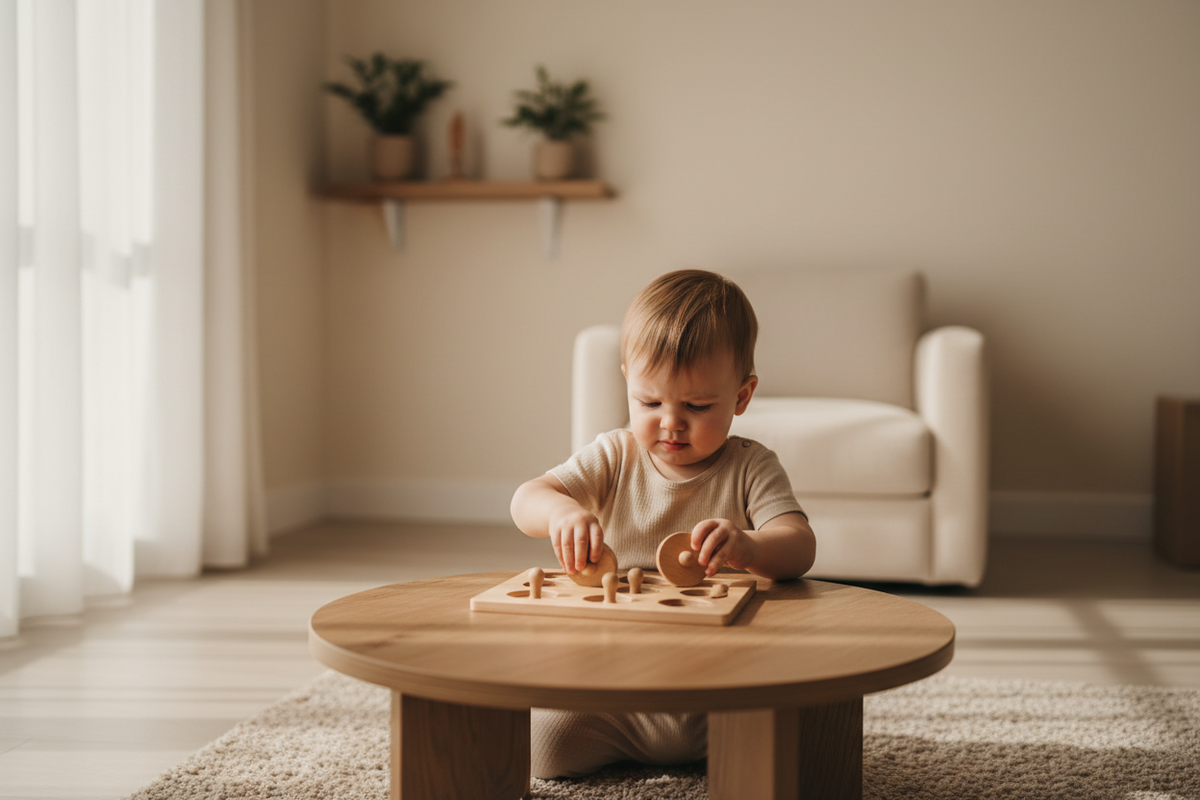
- Use the same play area. A familiar table, mat or tray can signal what happens next.
- Choose repeatable activities. Families need ideas that work more than once.
Build gradually
If screens currently fill a large part of the day, choose one transition to improve first. It might be the half hour before dinner or the first twenty minutes after school. A small rhythm that the family can repeat is more useful than a dramatic plan that lasts two days.
A small step to try today
Before the next screen session, prepare one five-minute activity and decide on one sentence you will use when the screen ends. The goal is not a protest-free transition. The goal is a clearer next step.