Article: 5 Low-Setup Play Ideas for Busy Afternoons
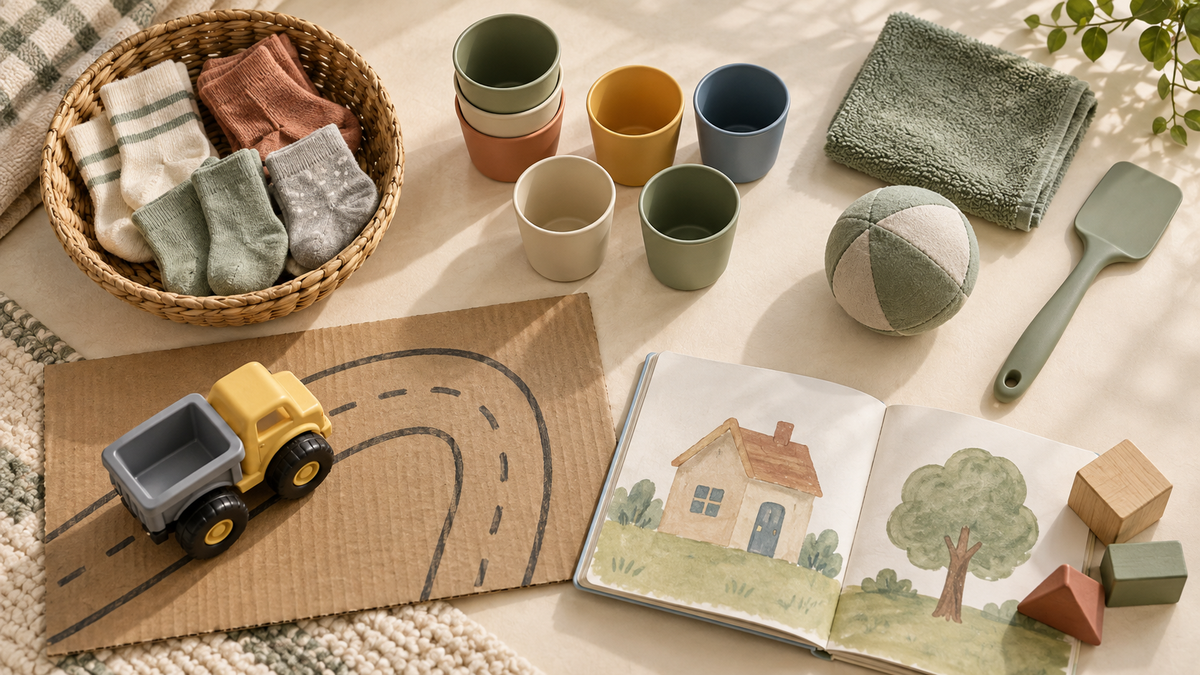
5 Low-Setup Play Ideas for Busy Afternoons
You are trying to finish one ordinary thing—answer an email, make dinner, put away groceries—and your child asks, “What can I do?”
This is not always the moment for a beautiful activity with twelve materials and a perfect result. On a busy afternoon, a useful play idea needs an easy beginning for the child and a realistic beginning for the parent.
The five ideas below use familiar things many families already have. Each one is designed to take less than five minutes to set out. That is a setup target, not a promise about how long a child will play. Some children may stay with an idea; others may change it, ask for company, or move on.
What counts as low-setup play?
Before adding an activity to your mental list, try this quick test:
- Can I set it out in under five minutes?
- Can I explain the first step in one sentence?
- Does it use things we already have?
- Can the materials return to one basket, shelf, or drawer?
- Can my child change the idea instead of following one correct result?
An activity does not have to pass every question. The test simply helps you notice the real cost of the idea before you begin.
Choose materials that fit your child's age and abilities. Avoid small parts for children who may put objects in their mouths, use unbreakable household items, and supervise any activity involving movement.
1. Sock Match & Roll
What you need: A small basket of clean socks.
Place four or five pairs on the floor or a low table. Separate the pairs and say:
“Can you find which socks belong together?”
Once the pairs are matched, your child can roll them into balls, arrange them by color, or make a line from smallest to largest. There is no need to turn it into a lesson. Matching the socks—or inventing another use for them—is enough.
Keep cleanup visible: Everything returns to the same basket.
2. Cup Build
What you need: Six to ten lightweight, unbreakable cups and a flat surface.
Set out the cups and offer one beginning:
“Can you build something with a doorway?”
The doorway might become a tower, garage, tunnel, animal home, or something without a name. If the structure falls, wait a moment before suggesting a solution. Your child may rebuild it, change the plan, or decide that knocking it down is the interesting part.
Keep it simple: Use cups that are safe for play, and keep them on the floor or table—not for climbing or standing on.
3. One-Color Hunt
What you need: Nothing new.
Choose one color and look together for three large, familiar objects around the room.
“Can we find three green things?”
Bring the objects to one spot. Your child can arrange them from light to dark, tell you where each one belongs, or use them as the beginning of a pretend story. If carrying an object is not practical, point to it or take a simple photo instead.
Keep cleanup visible: Return each object to its original place before choosing another color.
4. Cardboard Road
What you need: A flattened cardboard box or large piece of scrap paper, one crayon, and an age-appropriate toy vehicle or figure.
Draw one line across the cardboard and say:
“Where should this road go next?”
Your child can add a turn, bridge, parking space, river, house, or destination. The road does not need to look realistic. The first line is simply a place to begin.
Keep it repeatable: Slide the cardboard behind a shelf or door and bring it back another day. A familiar road can lead somewhere different next time.
5. Book-to-Build
What you need: A familiar picture book and a few blocks, cups, or cardboard pieces.
Open the book to one interesting picture. Choose one detail and ask:
“Could we build something from this page?”
It might be a home, bridge, bed, path, tall tree, or place for one character to stand. Your child does not need to recreate the picture. The book gives the activity a starting point; the build can go anywhere.
Keep the adult role small: Help choose the page or place the first two pieces, then follow the child's direction.
The cleanup test matters too
An activity can take two minutes to prepare and still leave twenty minutes of sorting, wiping, and searching for pieces. Before starting, decide where the materials will go when the play ends.
Try a one-container rule: all materials should return to one basket, tray, box, or shelf. This will not make every cleanup effortless, but it makes the ending easier to see.
You can also stop adding materials once the activity has begun. More supplies do not automatically create more possibilities. Sometimes one clear invitation is enough.
What if your child says no?
A simple setup is an invitation, not a demand. Your child may be tired, hungry, looking for connection, or interested in something else.
You do not have to respond by presenting ten more ideas. You can leave one option available, offer a short moment of connection, or say, “You are not sure what you want to do yet. This will be here if you want it.”
Low-setup play is meant to reduce pressure on the family—not create another standard parents have to meet.
A small test for this week
Choose one idea, not all five. Notice three things:
- How long did setup actually take?
- Did your child understand how to begin?
- What did cleanup require?
The useful result is not a perfectly occupied child. It is learning which kind of beginning fits your real afternoon.
For another gentle starting point, read What to Do When Your Child Says “I'm Bored”. If the busy moment happens after a device turns off, see How to Make Screen-Time Transitions Easier for Preschoolers.